
Mapping the Invisible
Readers might of noticed that recently we have been exploring the use of street view images to explore cities or how we can utilize geosocial media to understand the form of function of cities, but one thing we have not explored is the role o…
Continue reading »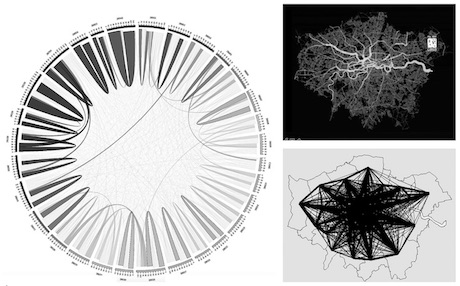 Just published: a special Issue of Philosophical Transactions B (The Royal Society) on ‘Interdisciplinary approaches for uncovering the impacts of architecture on collective behaviour’. My own contribution is ‘open access’ and you can read it and print it from the web …
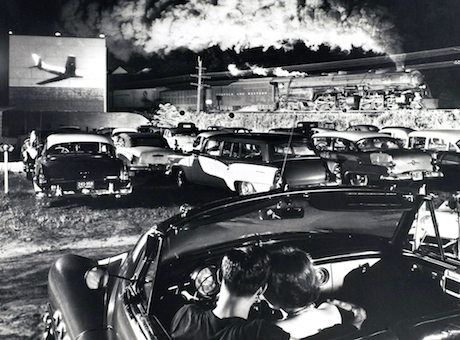 Infrastructure has become another hot word in post-industrial economies that are busy figuring out how they can renew all the physical plant that was constructed during their industrial past. The UK has established a National Infrastructure Commission amidst a flurry …
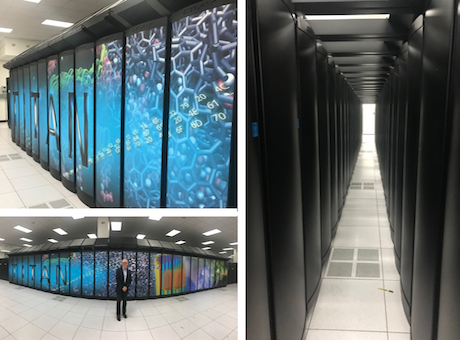 Visited the Urban Dynamics Institute (UDI) headed up Budhendra Bhaduri (Budhu) which is a rapidly growing effort in data-driven technologies applicable to cities. This group which is based at Oakridge National Labs which began life in the war years as part of …
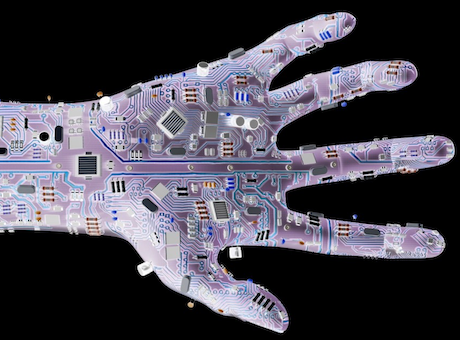 I should not say this but I don’t remember much about writing the attached piece which is entitled ‘Technology and the Democratic Management of Urban Complexity’ but here it is: click here. Published by Acciona and from a book entitled …
 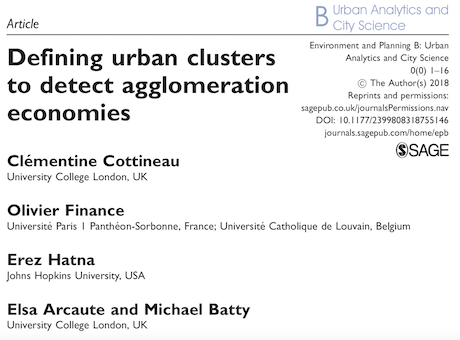 A new paper from our group. Click here for the paper and also for the issue of Environment and Planning B . Abstract: Agglomeration economies are a persistent subject of debate in regional science and city planning. Their definition turns on …
  read my editorial in EPB: Urban Analytics and City Science, and also check out the fact that it is almost 50 years from when Alan Wilson started Environment and Planning (A) and 45 from when Lionel March started B. The …
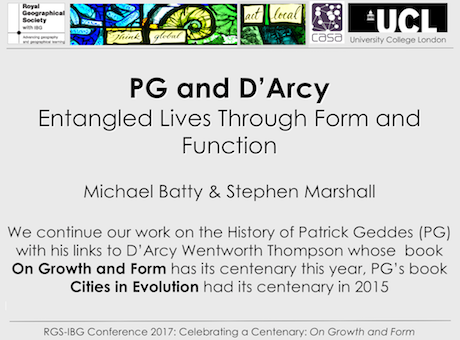 I hope more people (>2) see this post than actually attended the four lectures celebrating the contribution of D’Arcy Wentworth Thompson at this year’s RGS-IBG conference last Thursday when we presented. But such is the state of the world and …
 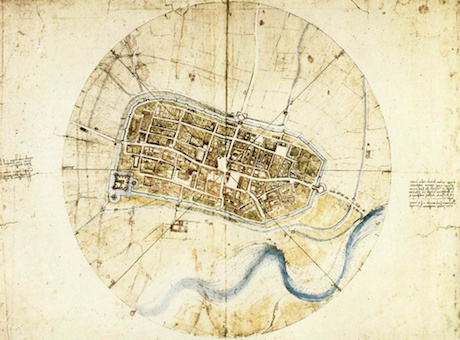 In this paper (downloadable here), I argue that the smart cities movement is simply the latest stage in the massive dissemination of digital computation that began with its invention some 70 or more years ago. In fact, the key thesis …